


게시물 관련 배경이미지
https://blog.lgchem.com/en/wp-content/uploads/2026/09/-lg_lupoy--1050x805.jpg
[LUPOY Story] Can Plastic Replace Metal Frames?
2026. 09. 30

[LUPOY Story] Can Plastic Replace Metal Frames?
2026. 09. 30
From smartphones and laptops to TV housings and automotive components, lightweight and easy-to-process plastics are used in a wide range of products around us. But when a component needs to withstand external impact and heat, being lightweight alone is not enough.
Frames that support solar panels outdoors for long periods require especially high durability. That is why metal has traditionally been the material of choice. But what if these frames could be made from plastic instead?
Today, we’re taking a closer look at LUPOY, LG Chem’s High-performance engineering plastic used across a wide range of applications, from everyday electronics to solar panel frames.
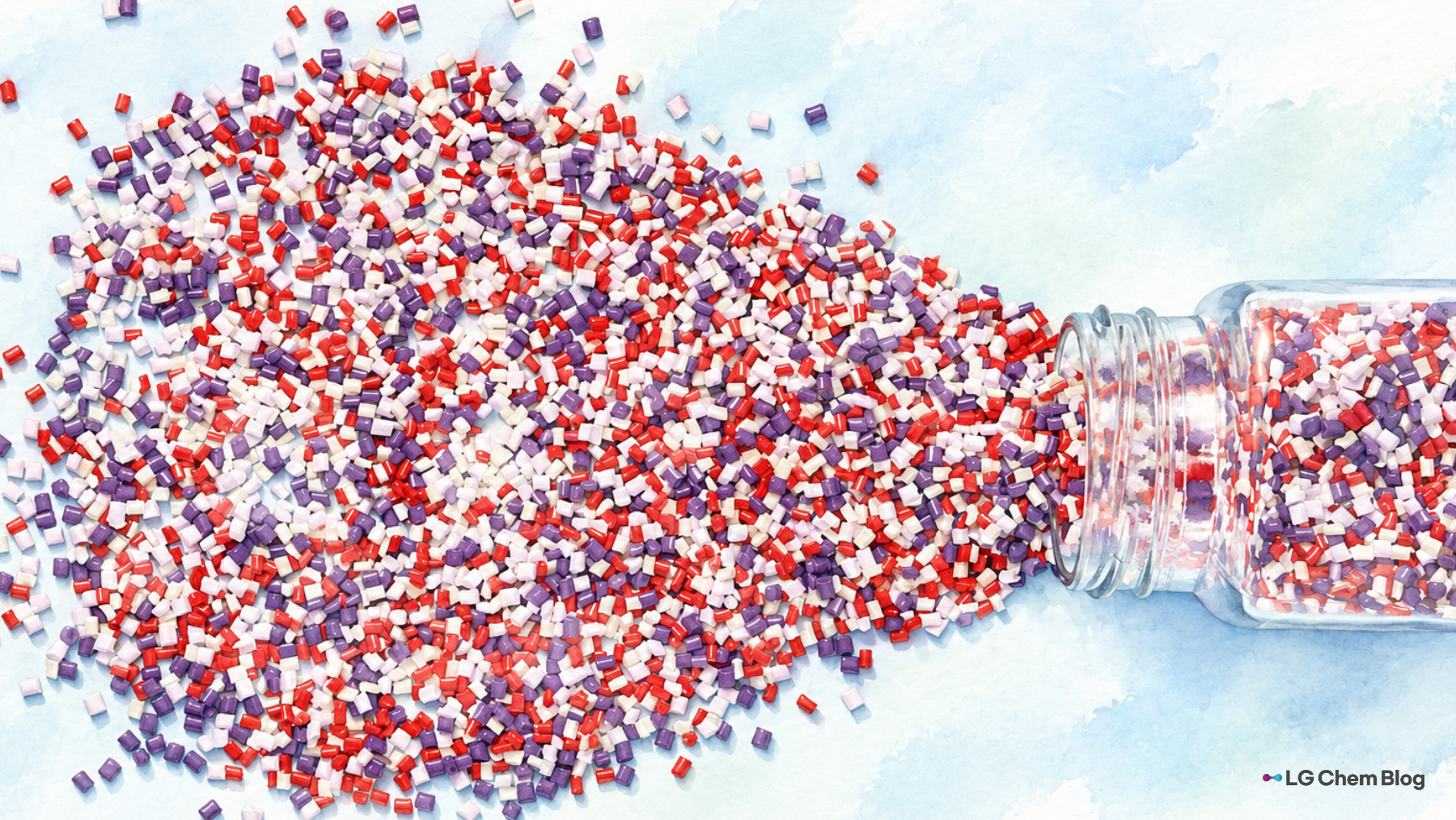
LUPOY is a high-functional engineering plastic based on PC (Polycarbonate), formulated by combining PC with various additives or other resins. It retains the key advantages of PC while adding properties tailored to the specific needs of each application.
The process of adjusting a material’s properties by blending a base resin with additives or reinforcing materials is known as compounding. Lubricants may be added to improve processability, while stabilizers help enhance material stability. Reinforcing materials such as glass fiber can also be used to increase stiffness. Another approach is polymer alloying, which combines PC with styrene resins such as ABS or ASA.
Based on these technologies, LG Chem produces a diverse range of LUPOY products, including PC Compound, PC/ABS Compound and PC/ASA Compound.
Even among PC based materials, properties can vary depending on what is blended and in what proportions. Through these different combinations, LUPOY can deliver performance tailored to the operating environment of each product.

Automotive components and electronic housings need to protect the parts inside while maintaining their shape during use. This means they must withstand not only physical impact, but also heat and temperature changes.
LUPOY addresses these requirements with its excellent mechanical and thermal properties, as well as strong impact resistance. Mechanical properties describe how a material withstands or deforms under external force, while thermal properties refer to how a material responds when exposed to heat. Depending on the application, LUPOY can also be used where high transparency is required.
Thanks to these characteristics, LUPOY is widely used in applications ranging from automotive interior and exterior materials to smartphones, TV housings and laptop housings. A housing is the outer enclosure that surrounds internal components. LUPOY helps form the exterior of a product while also protecting the components inside.
One application that clearly demonstrates LUPOY’s capabilities is the solar panel frame.
Solar panel frames surround the edges of a panel, supporting it while protecting it from external impact. Because they are installed outdoors on rooftops, building exteriors and other areas exposed directly to sunlight for long periods, they need high durability against heat and corrosion. For this reason, aluminum alloys have traditionally been widely used.
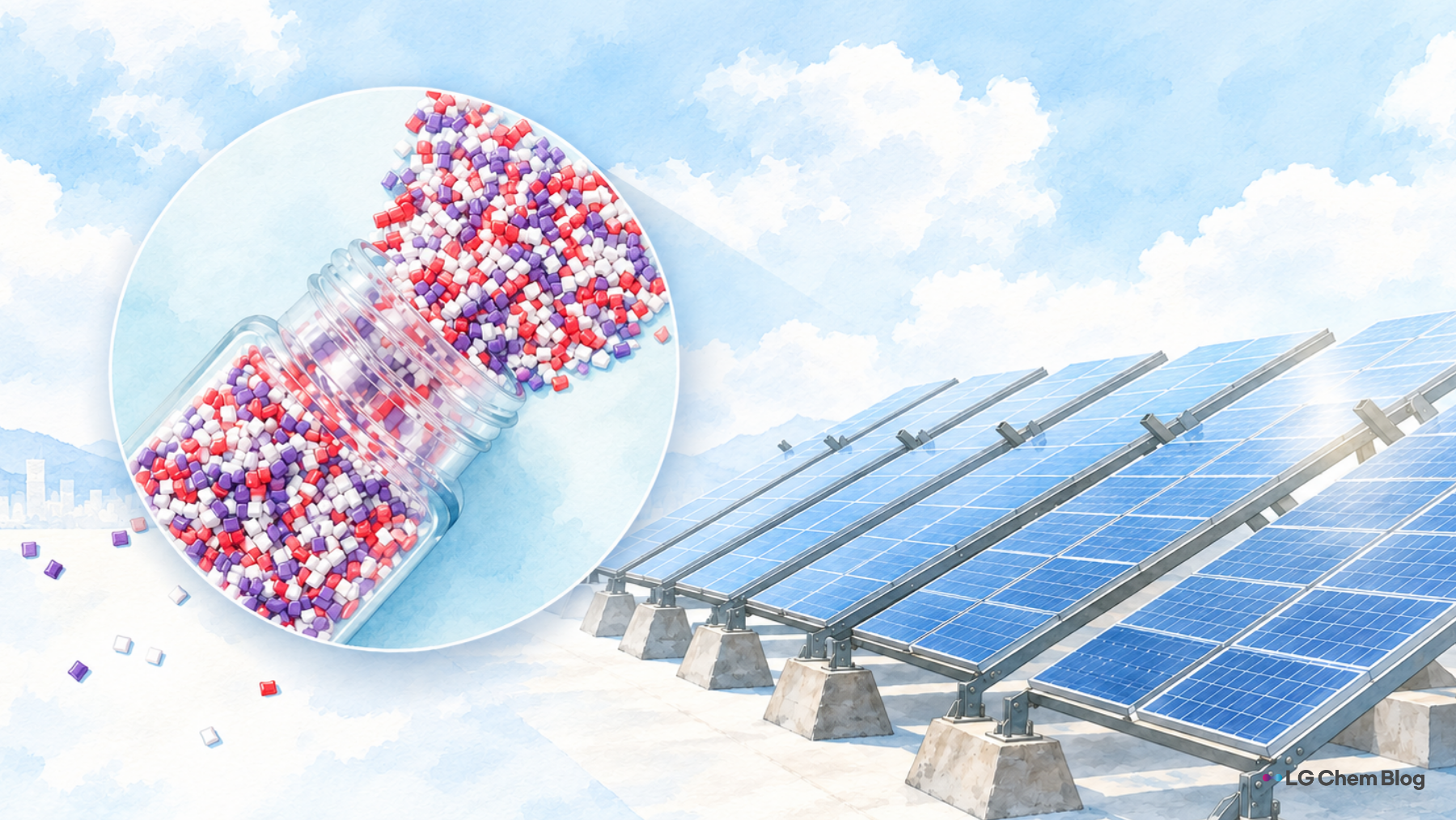
LG Chem developed LUPOY EU5201, Korea’s first PC/ASA material designed to replace metal frames used in solar panels. It combines PC with ASA resin and reinforces the polycarbonate compound with glass fiber to enhance mechanical properties beyond those of conventional plastics.
LUPOY EU5201 offers durability comparable to aluminum while weighing about half as much. It also offers cost competitiveness. Reducing the weight of the frame can lower the overall weight of a solar panel, which may help ease the burden of transportation and installation.
Because solar panel frames remain outdoors for long periods, stability against temperature changes and ultraviolet light is also important. LUPOY EU5201 has a low thermal expansion rate, giving it excellent dimensional stability. This means its size and shape are less likely to change even as temperatures fluctuate.
It also offers resistance to ultraviolet exposure. By reducing material degradation and discoloration caused by long term sunlight exposure, LUPOY EU5201 helps maintain both appearance and performance in outdoor environments.
In this way, LUPOY for solar panel frames demonstrates how material design can balance lightweight properties, durability and dimensional stability. The ability to precisely adjust material properties for a specific application is opening up new possibilities for plastics to replace metal in selected uses.
Today, material selection is increasingly based not only on performance, but also on whether recycled feedstock can be incorporated. The ability to reuse materials recovered after consumer use while still meeting required quality standards has become an important consideration.
LUPOY PCR PC and LUPOY PCR PC/ABS are products developed using recycled PC resin. PCR (Post-Consumer Recycled) materials refers to recycled raw materials recovered from products after they have been used and discarded by consumers.
These products are designed to incorporate recycled materials while maintaining the key characteristics of conventional LUPOY. They can be used across a range of applications, including automotive infotainment systems, laptops, mobile phone back covers and TV back covers.
Based on its PCR PC development capabilities, LG Chem can also produce products with higher levels of recycled content to meet customer requirements. By considering both application specific performance and material composition, LG Chem continues to expand its portfolio of products incorporating recycled raw materials.
From smartphones and laptops to automobiles and solar panel frames, different products rely on material technologies designed for their specific operating environments.
Based on PC, LG Chem’s LUPOY can deliver a wide range of properties, from impact and heat resistance to the durability and dimensional stability required for solar panel frames. Its range is expanding further with PCR products that incorporate recycled PC.
As LUPOY continues to take on new roles across more products and industries, it will be worth watching how materials technology continues to reshape the world around us.
Learn more about LUPOY 👉 https://www.lgchem.com/product-detail/lupoy
※Some images in this content were generated using AI.




There are no comments yet! Be the first to let us know your thoughts!